
For support and service of your machinery, Stiles has experts available 24/7 to help reduce downtime and get you back in action.
Technical Support: 616-698-6615
Service & Repairs: 616-698-7500
24/7 Parts: 1-800-727-8780
sale@inlandmachineokc.com
Parts are available from Stiles 24 hours a day, seven days a week, and are shipped from our Grand Rapids, Michigan fulfillment center.
24/7 Parts: 800-727-8780

With a customized Stiles University course, we can provide expert training for your team, on-location. Whether it's programming, operation or maintenance, we want to help you train your personnel to meet your production goals efficiently and effectively.

Experience the trusted workforce development training and machinery knowledge you rely on from Stiles University, now at your convenience. With technology changing every day and new methods being developed constantly, Stiles University Online has the latest information and training content available at your fingertips.
616-698-7500

Do you want to produce more efficiently? Processes and flows are key. We optimize these together with you, re-organize them and make sure that you reduce your lead time and save costs. This enables you to implement customized manufacturing and achieve your business goals.

Industrialized construction is evolving. Automation, robotics and advanced technology are raising the level of productivity, efficiency and precision for builders in North America.

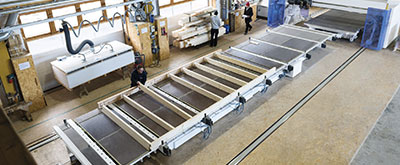
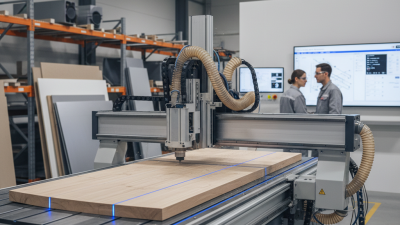
Stiles Machinery is at the forefront of providing technology and machining for producing high quality mass timber. Automated solutions for your mass timber production can increase your manufacturing quality and productivity.

Project management services from Stiles make it easy to streamline your entire project— from concept and consultation to integration and implementation.
For support and service of your machinery, Stiles has experts available 24/7 to help reduce downtime and get you back in action.
Technical Support: 616-698-6615
Service & Repairs: 616-698-7500
24/7 Parts: 1-800-727-8780
sale@inlandmachineokc.com
Parts are available from Stiles 24 hours a day, seven days a week, and are shipped from our Grand Rapids, Michigan fulfillment center.
24/7 Parts: 800-727-8780

With a customized Stiles University course, we can provide expert training for your team, on-location. Whether it's programming, operation or maintenance, we want to help you train your personnel to meet your production goals efficiently and effectively.

Experience the trusted workforce development training and machinery knowledge you rely on from Stiles University, now at your convenience. With technology changing every day and new methods being developed constantly, Stiles University Online has the latest information and training content available at your fingertips.
616-698-7500

Do you want to produce more efficiently? Processes and flows are key. We optimize these together with you, re-organize them and make sure that you reduce your lead time and save costs. This enables you to implement customized manufacturing and achieve your business goals.

Industrialized construction is evolving. Automation, robotics and advanced technology are raising the level of productivity, efficiency and precision for builders in North America.

Stiles Machinery is at the forefront of providing technology and machining for producing high quality mass timber. Automated solutions for your mass timber production can increase your manufacturing quality and productivity.

Project management services from Stiles make it easy to streamline your entire project— from concept and consultation to integration and implementation.
For support and service of your machinery, Stiles has experts available 24/7 to help reduce downtime and get you back in action.
Technical Support: 616-698-6615 Service & Repairs: 616-698-7500 24/7 Parts: 1-800-727-8780
Parts are available from Stiles 24 hours a day, seven days a week, and are shipped from our Grand Rapids, Michigan fulfillment center.
24/7 Parts: 800-727-8780For support and service of your machinery, Stiles has experts available 24/7 to help reduce downtime and get you back in action.
Technical Support: 616-698-6615 Service & Repairs: 616-698-7500 24/7 Parts: 1-800-727-8780
Parts are available from Stiles 24 hours a day, seven days a week, and are shipped from our Grand Rapids, Michigan fulfillment center.
24/7 Parts: 800-727-8780Choosing the right cnc machining parts supplier is not simply a price comparison. It is a practical decision about consistency, communication, process control, and long-term production risk. A supplier may promise tight tolerances, yet the real evidence appears in inspection reports, sample parts, and delivery records.
W. Edwards Deming, whose quality principles continue to influence precision manufacturing, said, “Quality comes not from inspection, but from the improvement of the production process.” This idea matters when evaluating a CNC partner. Ask how the supplier controls tool wear, verifies raw materials, and manages first-article inspection. Look for measurable details, such as ±0.01 mm tolerance capability, coordinate measuring machine reports, material certificates, and documented corrective actions.
Small details matter.
A reliable supplier should explain its equipment, machinist experience, surface-finishing options, and production capacity without hiding behind vague claims. Request a sample component with visible threads, clean edges, and a controlled surface finish. Discuss what happens when dimensions drift or a shipment falls behind schedule. Their response may reveal more than a polished website.
Price still matters, but the lowest quotation can become expensive after rework, rejected batches, or missed assembly dates. I have seen supplier comparisons focus too heavily on hourly rates. That approach is imperfect. A better review considers total cost, including inspection, packaging, communication, and failure risk.
No checklist guarantees a perfect partnership. However, clear drawings, realistic tolerances, traceable records, and honest technical dialogue create a stronger foundation for dependable cnc machining parts production.
Understanding the Role of a CNC Machining Parts Supplier
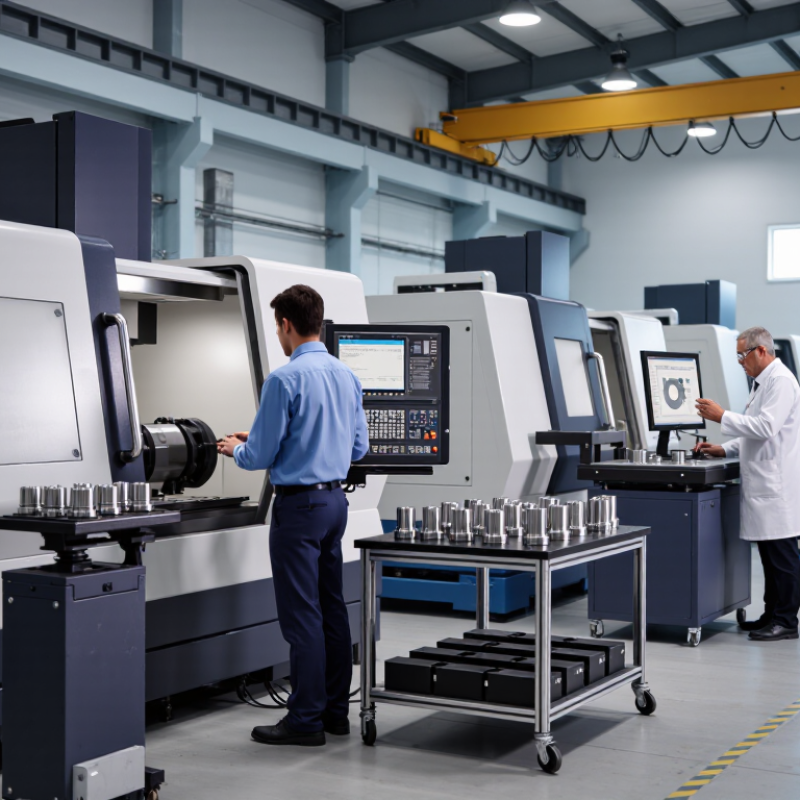
A CNC machining parts supplier does more than turn a drawing into a metal component. The supplier reviews dimensions, materials, tolerances, and production quantities before choosing suitable machining processes. This early review can reveal a thin wall, a hard-to-reach feature, or a tolerance that may increase cost without improving function. Small details matter.
During production, the supplier manages setup, machining, and inspection. Ask how critical dimensions are measured and recorded, especially for parts that must fit an existing assembly. A clear inspection report should identify the measured features, results, and any deviations. For example, a bore may need checking with a calibrated gauge rather than visual inspection alone. Good records help teams trace issues and compare later batches.
Communication is part of the work, too. A capable supplier flags unclear drawings and explains possible trade-offs, such as changing a radius to simplify tool access. That advice should be specific, not a vague promise of precision. Still, no process is flawless. A supplier may overlook a detail, so customers should review samples and confirm acceptance criteria before full production. The relationship works best when both sides share accurate drawings, timely feedback, and realistic expectations.
Choosing the Right CNC Machining Parts Supplier
A reliable supplier needs a clear picture of your part before quoting it. Start with the material, dimensions, tolerances, surface finish, and intended use. A drawing alone may not explain everything. State whether the part faces heat, moisture, vibration, or repeated loading. These conditions affect material selection and machining strategy.
Define production needs with equal care. Share the expected order quantity, prototype schedule, annual demand, and target delivery dates. Mention secondary work, such as anodizing, deburring, heat treatment, or assembly. Packaging can matter too, especially for polished or easily scratched parts. Small details become expensive later. I have seen projects delayed because a supplier assumed standard packaging and the customer expected individual protection.
Ask how the supplier verifies critical features. Reliable processes may include first-article inspection, calibrated measuring equipment, material certificates, and inspection reports. Confirm whether the supplier can maintain your tightest tolerance across the full batch, not just one sample. Also discuss design feedback before production begins. A machinist may identify a deep pocket, thin wall, or awkward setup that increases cost. That feedback is valuable, though it is not always correct. Review proposed changes against the part’s function. Avoid choosing a supplier based only on the lowest quote. A cheaper process may hide longer lead times, weaker inspection, or inconsistent repeatability. Share complete requirements, invite precise questions, and document every agreed detail.
| Requirement Dimension | Typical Requirement or Planning Data | Why It Matters | Supplier Information to Request |
|---|---|---|---|
| Part Material | Aluminum 6061-T6 Stainless Steel 304 Carbon Steel 1018 PEEK | Material selection affects machinability, strength, corrosion resistance, thermal performance, tooling, and total cost. | Ask for material certificates, traceability records, approved material sources, and the supplier's experience with the required alloy or engineering plastic. |
| Part Size and Geometry | Define maximum length, width, height, wall thickness, internal radii, deep pockets, holes, threads, and freeform surfaces. Example: 180 × 120 × 65 mm with a 2 mm minimum wall. | Machine travel, workholding, tool access, vibration, and part deformation determine whether the design can be produced reliably. | Request machine work envelopes, multi-axis capabilities, tooling limits, fixture concepts, and manufacturability feedback based on the 3D CAD model. |
| Dimensional Tolerance | Use general tolerances for non-critical features and identify critical dimensions separately. A common precision requirement is ±0.05 mm; tighter tolerances should be justified by function. | Tighter tolerances increase inspection time, setup complexity, tool control requirements, and production cost. | Request capability data, sample inspection reports, process-control methods, and confirmation of which dimensions can be held consistently. |
| Geometric Control | Specify flatness, parallelism, perpendicularity, concentricity, position, and profile tolerances according to functional requirements and GD&T principles. | A part may meet individual size tolerances but still fail during assembly if its form or feature location is not controlled. | Ask whether the supplier uses coordinate measuring machines, calibrated gauges, datum-based inspection plans, and documented GD&T interpretation. |
| Surface Finish | Typical machined surfaces may be specified around Ra 1.6–3.2 µm. Sealing, sliding, optical, or cosmetic areas may require a different value or finishing method. | Surface roughness affects friction, sealing, fatigue performance, appearance, coating adhesion, and cleaning requirements. | Request surface-finish measurement records, finishing options, inspection methods, and representative samples from similar materials. |
| Secondary Finishing | Anodizing Passivation Plating Powder Coating Heat Treatment | Post-machining treatments can change dimensions, hardness, corrosion resistance, color, and functional performance. | Confirm approved treatment specifications, thickness control, masking requirements, subcontractor management, and final inspection responsibility. |
| Annual or Order Quantity | 1–10 prototypes 11–100 low-volume parts 101–1,000 batch production 1,000+ repeat production | Quantity influences process selection, fixture investment, setup allocation, inspection sampling, and unit pricing. | Request separate quotations for prototype, pilot, batch, and repeat production, including setup charges and volume-based price breaks. |
| Prototype and Production Stage | State whether the project requires a one-off prototype, design-validation batch, pilot run, or stable serial production. | Each stage requires different levels of process optimization, documentation, tooling investment, and change management. | Ask how the supplier handles design-for-manufacturing reviews, first-article approval, engineering changes, and production ramp-up. |
| Lead Time | Define required dates for design review, first article, production release, and delivery. A realistic schedule should include material procurement and finishing time. | Machining time alone does not represent the full delivery cycle; material availability, programming, inspection, and outside processing can add delays. | Request a milestone-based schedule, capacity confirmation, material lead time, contingency planning, and communication procedures for delays. |
| Quality System | For general industrial work, a documented quality system is important. Regulated or safety-critical applications may require industry-specific controls and records. | A controlled quality process reduces variation and provides traceable evidence that parts conform to specifications. | Request quality certifications, inspection procedures, nonconformance handling, corrective-action records, and document-retention policies. |
| Inspection and Measurement | Define required documents such as dimensional reports, material certificates, surface-finish results, coating reports, and first-article inspection records. | The inspection plan should match the risk and function of each feature rather than relying only on a final visual check. | Confirm equipment calibration, measurement uncertainty, sampling plans, inspection frequency, and the format of reports supplied with each shipment. |
| Cost Structure | Evaluate material, programming, setup, machining, tooling, inspection, finishing, packaging, shipping, and potential rework as separate cost elements. | The lowest quoted unit price may not be the lowest total cost if it excludes inspection, finishing, expedited shipping, or engineering support. | Request an itemized quotation with assumptions, one-time charges, recurring charges, order minimums, payment terms, and validity period. |
| Packaging and Delivery | Specify corrosion protection, individual separators, protective caps, labeling, quantity per package, delivery location, and required shipping documents. | Proper packaging prevents scratches, deformation, contamination, and mix-ups during storage and transportation. | Ask for packaging samples or photographs, identification controls, delivery terms, shipment tracking, and procedures for damaged goods. |
| Supplier Communication | Establish response times, technical contact roles, drawing-revision control, approval checkpoints, and the escalation path for quality or delivery issues. | Clear communication reduces errors caused by outdated drawings, misunderstood tolerances, and unapproved process changes. | Evaluate the supplier's technical review process, revision-control system, meeting cadence, response standards, and change-notification procedure. |
Choosing a CNC machining parts supplier starts with the part’s real demands: material, tolerance, finish, and production volume. Ask whether the shop has suitable milling or turning equipment, and whether it can handle your part’s geometry without unnecessary setups. Look beyond machine counts. A five-axis machine is useful only when the team can program and inspect the features you need.
Quality depends on repeatable checks, not confident claims. Request sample inspection reports, measurement methods, and records for material traceability. For a close-tolerance bore, ask how it is measured and how often tools are checked for wear. Review a first-article report if the part is new. Numbers need context. A tolerance table may look impressive, yet say little about process stability across a full production run. Ask how nonconforming parts are handled, too.
Certifications can support your assessment, but they do not replace it. Check that the certificate is current, covers the relevant facility, and matches the work being quoted. ISO 9001 may indicate a documented quality system; it does not guarantee every part will meet spec. If your project requires a specific industry standard, verify the supplier’s scope directly. A shop’s answers may be imperfect, and that is worth probing: clear records and candid limits are more useful than polished promises.
A CNC quote should show more than one delivery date. Ask for separate timelines for drawing review, programming, material procurement, machining, finishing, and inspection. A ten-day machining estimate can still become a five-week order if stock material is unavailable. The detail matters.
The Institute for Supply Management’s Manufacturing PMI Report on Business tracks Supplier Deliveries as a distinct index component, measuring whether deliveries are getting slower or faster. It is a useful reminder: market conditions can shift lead times, so ask suppliers how often they update schedules. Request a recent example of a delayed job and how the shop communicated the change. Clear answers beat confident promises.
Compare costs line by line: setup, material, machining, finishing, inspection, packaging, and shipping. Deloitte’s 2023 Global Chief Procurement Officer Survey reported that 71% of procurement leaders prioritized cost reduction. Still, the lowest unit price may hide expensive rework or rushed freight. Ask what inspection records accompany the parts, and whether quoted tolerances were actually achieved on similar work. I would not trust a polished quote alone. A missed email can matter as much as a missed tolerance; agree on one contact, a response window, and a weekly status update.
Choosing a CNC machining parts supplier requires more than comparing prices. A low quote can hide weak inspection, unstable materials, or delayed communication. Ask for sample parts made from the same material and using similar tolerances. Examine surface finish, edge quality, thread accuracy, and packaging. Small details often reveal process discipline.
During supplier evaluations, review inspection reports, material certificates, calibration records, and production capacity. A reliable supplier should explain its measurement methods clearly. Confirm whether it uses coordinate measuring machines, optical inspection, or calibrated gauges. Visit the workshop if possible. Look at chip control, machine maintenance, and how operators record nonconforming parts. Clean records matter.
Long-term cooperation depends on honest communication. Share drawings, revision rules, delivery targets, and acceptance standards before production begins. A capable supplier should raise concerns about thin walls, deep cavities, or unrealistic tolerances. That conversation may prevent expensive rework. I once treated a fast quotation as proof of capability. It was not. The first trial exposed poor burr removal and unclear revision control. Since then, I test communication as carefully as machining accuracy. Start with a pilot order, measure actual lead time, and review corrective actions. Trust should grow from repeated evidence, not promises.